- Posts: 1500
- Thank you received: 123
- Forum
- Open Forum
- Miscellaneous Research Topics
- General Airfield or 20th Century Military Architecture Discussion Topics
- Falmouth Bombing ~ Tuesday 30th May 1944
Falmouth Bombing ~ Tuesday 30th May 1944
- Harboda77
- Topic Author
- Offline
- Platinum Member
-

Less
More
05 Feb 2015 10:47 #51
by Harboda77
Replied by Harboda77 on topic Falmouth Bombing ~ Tuesday 30th May 1944
Thanks all for the links and related information.
Apparently its official ( ? ) name had been operation ' squabble ' and it had been approved by Major Cowburn & Major Gubbins.
Mrs Daisy Price kept in contact with the Free French personal during the 1950's & 1960's and the majority of these stories came from her recollections.
There may be a few on the forum who will remember General Massu and the story associated with his parra's giving their suspects a ' pulse up the pipe ' to help them remember vital information that they needed to protect life and property.
Dave.
Apparently its official ( ? ) name had been operation ' squabble ' and it had been approved by Major Cowburn & Major Gubbins.
Mrs Daisy Price kept in contact with the Free French personal during the 1950's & 1960's and the majority of these stories came from her recollections.
There may be a few on the forum who will remember General Massu and the story associated with his parra's giving their suspects a ' pulse up the pipe ' to help them remember vital information that they needed to protect life and property.
Dave.
Please Log in or Create an account to join the conversation.
- John Anderson
- Offline
- Elite Member
-

Less
More
- Posts: 1287
- Thank you received: 195
05 Feb 2015 11:08 #52
by John Anderson
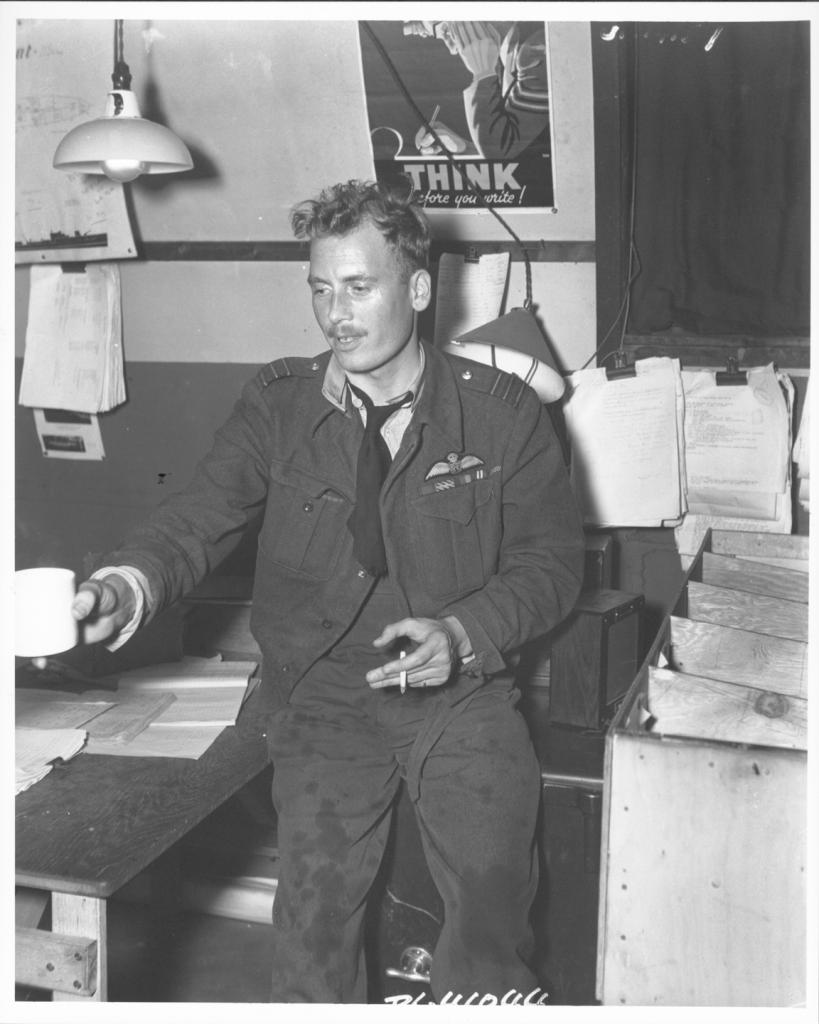
Agree several photos from the Davidstow period inc. local beaches and possibly the tower. Ken Gatward is in photo PL41044 page 7.
This image is hidden for guests.
Replied by John Anderson on topic Falmouth Bombing ~ Tuesday 30th May 1944
Fascinating stuff. I had heard the story of the flight to put the flag on the Arc de Triumphe but was unaware of a Cornish connection.
The pilot may feature in the numerous photos on the 404 Sqn website www.404squadron.com/index.html They have loads of pics which they don't have captions for. I have identified several as being at Davidstow.
Agree several photos from the Davidstow period inc. local beaches and possibly the tower. Ken Gatward is in photo PL41044 page 7.
This image is hidden for guests.
Please log in or register to see it.
Please Log in or Create an account to join the conversation.
- Harboda77
- Topic Author
- Offline
- Platinum Member
-
Less
More
- Posts: 1500
- Thank you received: 123
05 Feb 2015 15:05 #53
by Harboda77
Replied by Harboda77 on topic Falmouth Bombing ~ Tuesday 30th May 1944
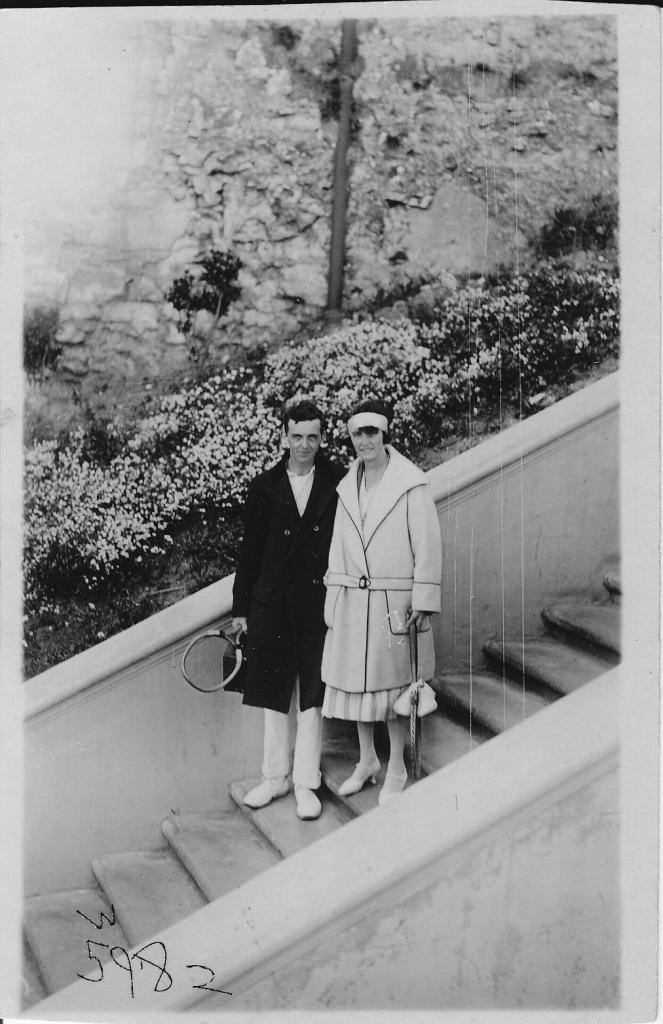
1927 period photo for jane1706 of Mr & Mrs Price when they relocated to Falmouth after exiting the Daimler car sales business taking one Daimler and one Lanchester for collecting visitors from the original railway station.
Dave.
This image is hidden for guests.
Dave.
This image is hidden for guests.
Please log in or register to see it.
Please Log in or Create an account to join the conversation.
- Harboda77
- Topic Author
- Offline
- Platinum Member
-
Less
More
- Posts: 1500
- Thank you received: 123
05 Feb 2015 15:15 #54
by Harboda77
Replied by Harboda77 on topic Falmouth Bombing ~ Tuesday 30th May 1944
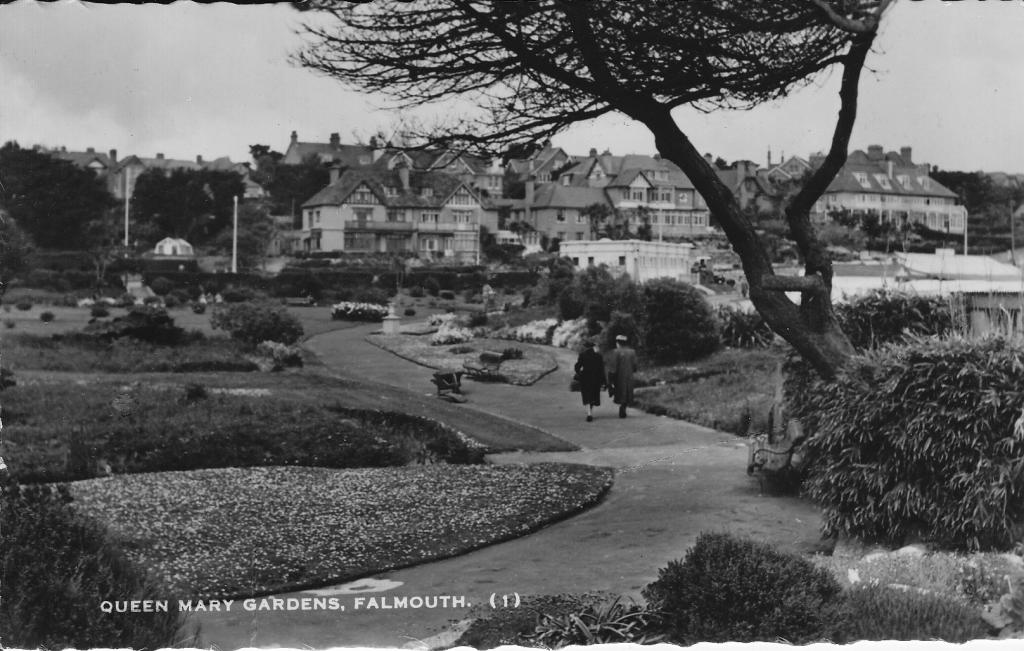
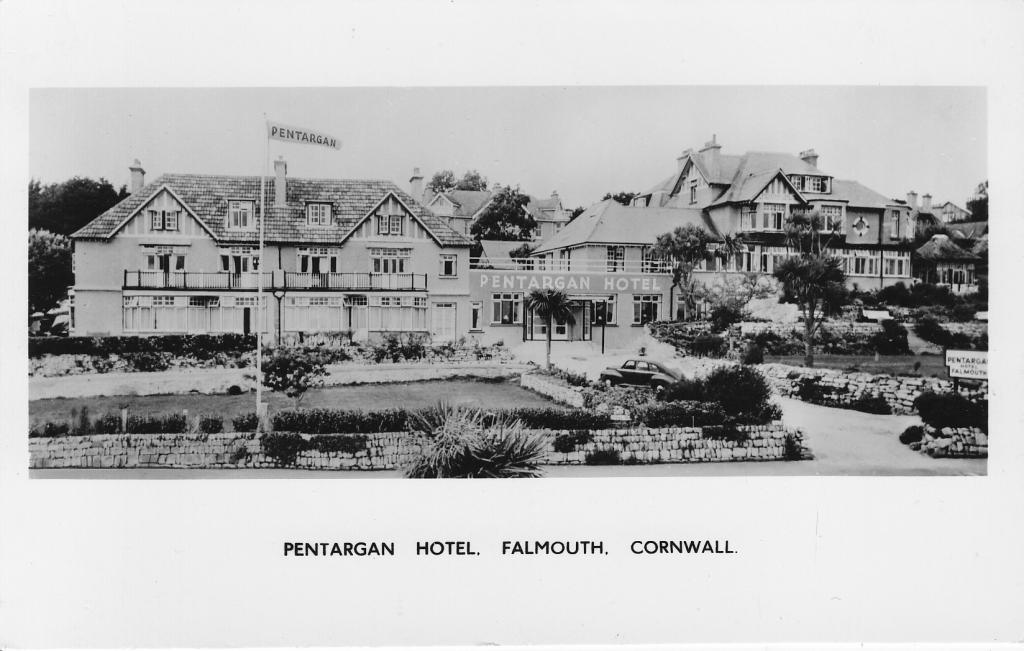
1945 to 1955 period photo's for cornwallphil on the original Pentargan hotel before it was renovated by Mr Price and after the completion of the refurbishment.
The hotel pitch & pot golf course was installed in the garden behind the flag pole.
The house to the right of the hotel in the colour image was the hotel over flow and where the Freefrench visitors were located when they revisited Falmouth during the late 1950's and early 1960's.
The ball room and cinema was located underground beneath the Pentargan name sign.
Their life buoy circular window was still a window that was blanked off during later devellopments.
Dave.
This image is hidden for guests.
This image is hidden for guests.
This image is hidden for guests.
The hotel pitch & pot golf course was installed in the garden behind the flag pole.
The house to the right of the hotel in the colour image was the hotel over flow and where the Freefrench visitors were located when they revisited Falmouth during the late 1950's and early 1960's.
The ball room and cinema was located underground beneath the Pentargan name sign.
Their life buoy circular window was still a window that was blanked off during later devellopments.
Dave.
This image is hidden for guests.
Please log in or register to see it.
This image is hidden for guests.
Please log in or register to see it.
This image is hidden for guests.
Please log in or register to see it.
Please Log in or Create an account to join the conversation.
- CornwallPhil
-

- Offline
- Elite Member
-
Less
More
- Posts: 870
- Thank you received: 163
05 Feb 2015 15:25 #55
by CornwallPhil
Otherwise fascinating photos. Thanks for sharing Dave. It's great to see it looking spic and span after the wartime damage.
Replied by CornwallPhil on topic Falmouth Bombing ~ Tuesday 30th May 1944
I think my set's on the blink again!!!in the colour image was
Otherwise fascinating photos. Thanks for sharing Dave. It's great to see it looking spic and span after the wartime damage.
Please Log in or Create an account to join the conversation.
- Harboda77
- Topic Author
- Offline
- Platinum Member
-
Less
More
- Posts: 1500
- Thank you received: 123
05 Feb 2015 15:59 #56
by Harboda77
Replied by Harboda77 on topic Falmouth Bombing ~ Tuesday 30th May 1944
[IMG]/community/156528=20375-Pentargan 2.jpg[/img]
This was originally the Holmlea ( ? ) hotel that they purchased with the settlement from the original Pentargen that had been destroyed during the raid of 1944.
This one had been located at Gyllinvase beach that must have been nearly a mile further west of the original hotel.
The colour photo did not load so its not your computer ~ will attempt another down load. ( Failed again must be to large )
Dave.
I think my set's on the blink again!!!
Otherwise fascinating photos. Thanks for sharing Dave. It's great to see it looking spic and span after the wartime damage.
This was originally the Holmlea ( ? ) hotel that they purchased with the settlement from the original Pentargen that had been destroyed during the raid of 1944.
This one had been located at Gyllinvase beach that must have been nearly a mile further west of the original hotel.
The colour photo did not load so its not your computer ~ will attempt another down load. ( Failed again must be to large )
Dave.
Please Log in or Create an account to join the conversation.
- CornwallPhil
-
- Offline
- Elite Member
-
Less
More
- Posts: 870
- Thank you received: 163
05 Feb 2015 20:47 #57
by CornwallPhil
This is the hotel that burned down in 2012. The site currently stands vacant.
www.westbriton.co.uk/Falmouth-Beach-Hote...82-detail/story.html
St Michael's Hotel next door have designs on the site.
www.westbriton.co.uk/Plans-revealed-Falm...43-detail/story.html
[IMG]/community/156544=20376-Pentargon Holmlea Hotel advert.jpg[/img]
This advert from an early post-war guide book shows the combining of the two hotels. The name Pentargan being transferred from the bombed hotel, which as you say, was along Marine Drive towards Pendennis.
[IMG]/community/156544=20377-Pentargon Hotel.jpg[/img]
This postcard shows the original Pentargan hotel that was hit on the 30th May 1944.
Replied by CornwallPhil on topic Falmouth Bombing ~ Tuesday 30th May 1944
[IMG]/community/156528=20375-Pentargan 2.jpg[/img]
This was originally the Holmlea ( ? ) hotel that they purchased with the settlement from the original Pentargen that had been destroyed during the raid of 1944.
This one had been located at Gyllinvase beach that must have been nearly a mile further west of the original hotel.
Dave.
This is the hotel that burned down in 2012. The site currently stands vacant.
www.westbriton.co.uk/Falmouth-Beach-Hote...82-detail/story.html
St Michael's Hotel next door have designs on the site.
www.westbriton.co.uk/Plans-revealed-Falm...43-detail/story.html
[IMG]/community/156544=20376-Pentargon Holmlea Hotel advert.jpg[/img]
This advert from an early post-war guide book shows the combining of the two hotels. The name Pentargan being transferred from the bombed hotel, which as you say, was along Marine Drive towards Pendennis.
[IMG]/community/156544=20377-Pentargon Hotel.jpg[/img]
This postcard shows the original Pentargan hotel that was hit on the 30th May 1944.
Please Log in or Create an account to join the conversation.
- Harboda77
- Topic Author
- Offline
- Platinum Member
-
Less
More
- Posts: 1500
- Thank you received: 123
05 Feb 2015 21:21 #58
by Harboda77
Replied by Harboda77 on topic Falmouth Bombing ~ Tuesday 30th May 1944
Cornwallphil ~ I always stayed in a one bedroom wooden staff bungalow that had been located at the rear of the hotel as it was easier to get out and about without being seen by the family.
I had forgotten the French connection for the Gaumont cinema which is mentioned in the advertisement.
In 1960 they were doing a good trade in Winston Churchill statutes that smoked a small cigar and I trust that some have survived in the local antique shops.
I collected a dedicated Falmouth Flag on St Piran's feast day that was also destroyed in a house fire during 1995.
Pleased to read that the owners of St Michaels are going to develop the site as they were more sensitive to the location than others ~ during my early visits I spent some time with the senior owner who explained some of the Falmouth folk law history etc.
Daisy Prices sister married a local lad named Sault who was the Plymouth dock diver during WW2 who searched for mines being attached to ships hulls.
Dave.
I had forgotten the French connection for the Gaumont cinema which is mentioned in the advertisement.
In 1960 they were doing a good trade in Winston Churchill statutes that smoked a small cigar and I trust that some have survived in the local antique shops.
I collected a dedicated Falmouth Flag on St Piran's feast day that was also destroyed in a house fire during 1995.
Pleased to read that the owners of St Michaels are going to develop the site as they were more sensitive to the location than others ~ during my early visits I spent some time with the senior owner who explained some of the Falmouth folk law history etc.
Daisy Prices sister married a local lad named Sault who was the Plymouth dock diver during WW2 who searched for mines being attached to ships hulls.
Dave.
Please Log in or Create an account to join the conversation.
- LottieRussell
- Offline
- New Member
-

Less
More
- Posts: 1
- Thank you received: 0
11 Jun 2021 11:51 #59
by LottieRussell
Replied by LottieRussell on topic Falmouth Bombing ~ Tuesday 30th May 1944
The owners of the hotel are my family. I am interested in learning more about exactly what happened
Please Log in or Create an account to join the conversation.
- CornwallPhil
-
- Offline
- Elite Member
-
Less
More
- Posts: 870
- Thank you received: 163
14 Jun 2021 23:23 #60
by CornwallPhil
Replied by CornwallPhil on topic Falmouth Bombing ~ Tuesday 30th May 1944
Hi Lottie,
Here's a concise summary of the raid for starters taken from my eBook on RAF Portreath:
Tuesday 30th May
Some 25 enemy aircraft from KG 2 and I & II/KG 6 attacked Falmouth just after midnight. Three aircraft of 151 Squadron were vectored into the stream of enemy aircraft.
Flares had been reported in the Helford direction at 2345 hours. The alert sounded in Falmouth at 0021 hours with the radar plots showing the enemy aircraft were 30 to 35 miles south of Falmouth heading north. At 0029 hours flares were dropped across the harbour boom and bay which was full of ships and landing craft ready for D-Day. At 0037 hours Falmouth’s AA guns opened fire.
At 0049 hours a hangar in the docks with inflated barrage balloons was set on fire. Two bungalows at Melville Crescent were destroyed and many others damaged. The Pentargon Hotel on the seafront was demolished and the Boscawen, Carthian House, Albion and Belseto Hotels were substantially damaged. A direct hit on a 1,250,000 gallon petrol storage tank at Swanvale started a large conflagration that could be seen over much of west Cornwall. When the burning oil took the course of the nearby stream, the evacuation of the housing nearby began as whirlpools of smoke and flame erupted 70 feet into the air. After many hours the stream was dammed with the help of two American bulldozers and the situation brought under control.
25 High Explosive bombs, 23 firepots, 20 butterfly bombs were dropped on Falmouth. A total of 10 people were killed including two civilians, three British service personnel and five American service personnel, although one RAF record states there were eight American deaths.
At 0050 hours Barrage Balloon Site 8A, the balloon vessel ‘Donald & Doris’ had an impact on their cable. Other eyewitnesses report seeing a hostile aircraft crash into the sea about one mile south of Pendennis Point at this time.
F/O Kneath and W/O Kelsey of 151 Squadron carried out a routine night flying test with an early G.C.I. patrol. The patrol was interrupted when they were ordered to investigate bogeys five miles to the south east. The target description was immediately changed to bandits which were flying at an altitude of 2000 feet. An Airborne Interception contact was made and led to a visual on a Heinkel lll. Due to the low speed of the Heinkel, the Mosquito had to throttle back and partially lower the flaps to synchronise speed before opening fire at a range of about 300 feet. The port engine of the aircraft blew up and it crashed into the sea with a large explosion south of Falmouth.
They were given fresh instructions and a second A.I. contact was obtained but they were called off by Control as the bandit was entering the Artillery Zone of the Gun Defended Area at Falmouth. Given that most of the D-Day vessels were firing wildly into the air avoiding Falmouth and the Carrick Roads was a wise call. The RAF believe their barrage balloon that was peppered with machine gun bullet holes was only hit by friendly fire. Other aircraft obtained A.I. contacts but no visuals. The radar plot had cleared at 0120 hours, the All Clear was sounded in Falmouth and the planes returned to base. When dawn broke the smoke from the oil tank fire could still be seen from Portreath.
Here's a concise summary of the raid for starters taken from my eBook on RAF Portreath:
Tuesday 30th May
Some 25 enemy aircraft from KG 2 and I & II/KG 6 attacked Falmouth just after midnight. Three aircraft of 151 Squadron were vectored into the stream of enemy aircraft.
Flares had been reported in the Helford direction at 2345 hours. The alert sounded in Falmouth at 0021 hours with the radar plots showing the enemy aircraft were 30 to 35 miles south of Falmouth heading north. At 0029 hours flares were dropped across the harbour boom and bay which was full of ships and landing craft ready for D-Day. At 0037 hours Falmouth’s AA guns opened fire.
At 0049 hours a hangar in the docks with inflated barrage balloons was set on fire. Two bungalows at Melville Crescent were destroyed and many others damaged. The Pentargon Hotel on the seafront was demolished and the Boscawen, Carthian House, Albion and Belseto Hotels were substantially damaged. A direct hit on a 1,250,000 gallon petrol storage tank at Swanvale started a large conflagration that could be seen over much of west Cornwall. When the burning oil took the course of the nearby stream, the evacuation of the housing nearby began as whirlpools of smoke and flame erupted 70 feet into the air. After many hours the stream was dammed with the help of two American bulldozers and the situation brought under control.
25 High Explosive bombs, 23 firepots, 20 butterfly bombs were dropped on Falmouth. A total of 10 people were killed including two civilians, three British service personnel and five American service personnel, although one RAF record states there were eight American deaths.
At 0050 hours Barrage Balloon Site 8A, the balloon vessel ‘Donald & Doris’ had an impact on their cable. Other eyewitnesses report seeing a hostile aircraft crash into the sea about one mile south of Pendennis Point at this time.
F/O Kneath and W/O Kelsey of 151 Squadron carried out a routine night flying test with an early G.C.I. patrol. The patrol was interrupted when they were ordered to investigate bogeys five miles to the south east. The target description was immediately changed to bandits which were flying at an altitude of 2000 feet. An Airborne Interception contact was made and led to a visual on a Heinkel lll. Due to the low speed of the Heinkel, the Mosquito had to throttle back and partially lower the flaps to synchronise speed before opening fire at a range of about 300 feet. The port engine of the aircraft blew up and it crashed into the sea with a large explosion south of Falmouth.
They were given fresh instructions and a second A.I. contact was obtained but they were called off by Control as the bandit was entering the Artillery Zone of the Gun Defended Area at Falmouth. Given that most of the D-Day vessels were firing wildly into the air avoiding Falmouth and the Carrick Roads was a wise call. The RAF believe their barrage balloon that was peppered with machine gun bullet holes was only hit by friendly fire. Other aircraft obtained A.I. contacts but no visuals. The radar plot had cleared at 0120 hours, the All Clear was sounded in Falmouth and the planes returned to base. When dawn broke the smoke from the oil tank fire could still be seen from Portreath.
Please Log in or Create an account to join the conversation.
- Forum
- Open Forum
- Miscellaneous Research Topics
- General Airfield or 20th Century Military Architecture Discussion Topics
- Falmouth Bombing ~ Tuesday 30th May 1944
Time to create page: 0.052 seconds

![[IMG]/community/156528=20375-Pentargan 2.jpg[/img]](/community/156528=20375-Pentargan%202.jpg)
![[IMG]/community/156544=20376-Pentargon Holmlea Hotel advert.jpg[/img]](/community/156544=20376-Pentargon%20Holmlea%20Hotel%20advert.jpg)
![[IMG]/community/156544=20377-Pentargon Hotel.jpg[/img]](/community/156544=20377-Pentargon%20Hotel.jpg)